A Guide to Teenage Civic ParticipationHow to start, how to look, how to keep going — and what the adults around you can do
6 min read
TEIGEN JP is a student organization founded in June 2023 in Adachi City, Tokyo. Thirty-eight high school and university students (as of June 2026) take part, from Tokyo and the three neighbouring prefectures.
The reason we were founded is simple: there was nowhere to join. So think of this page as the thing we ourselves were looking for at the time, set back down for the people who come after us.
Stage 1 | First, look for somewhere to join
It is fine not to have decided what you want to do. you cannot know what suits you until you try.
When you look, work outwards from what is nearest: teachers at school, the city's public information, the library or community centre, the student council. A place that is actually running nearby is usually easier to get into than a famous organization far away.
Open calls from local government are easily missed. More and more municipalities hold councils that listen to children and young people, or run youth programmes.
- Looking for somewhere to take part as a teenager | How to choose, and what to do when nobody is recruiting — where to look, what to check before choosing, and three moves when recruitment is closed
Stage 2 | If you cannot find one, start one
Even when you find an organization you want to join, the intake period may not line up. Most student organizations recruit new members only about once a year.
At that point the shortest route can be to start one yourself. It sounds reckless, but TEIGEN JP began in exactly that way.
What to do in the first three months is settled: gather people, finish one activity, then divide the roles. Reverse the order and it stalls.
- Starting a student organization in high school: getting people, work and roles into shape in three months — where to begin
- How to hold a mock election in your own town: approaching the local authority and the election commission — the one-page document to send an official when you first approach them
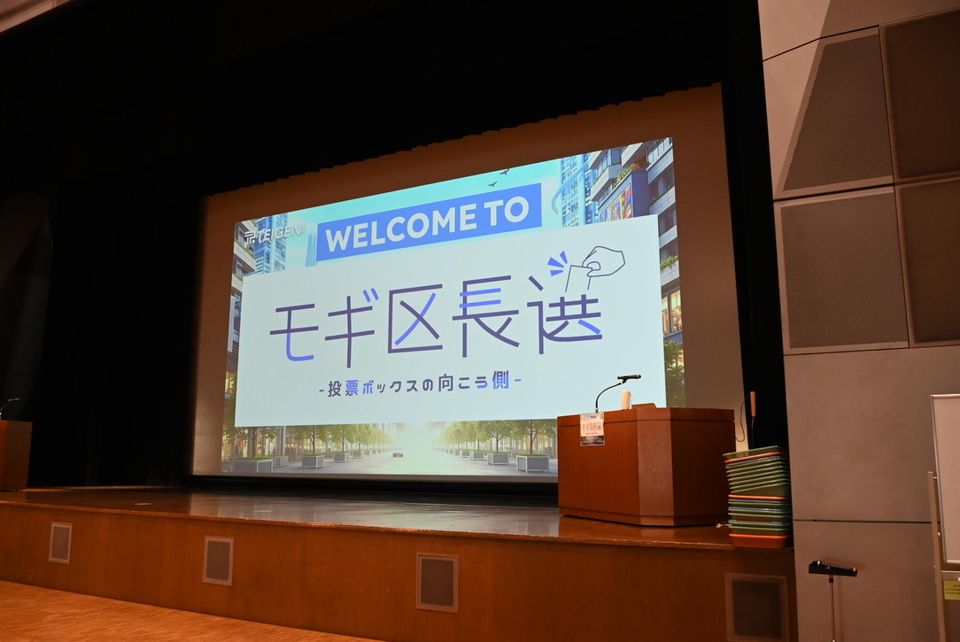
TEIGEN JP shares the model, materials and operational know-how of the Mock Ward Mayoral Election and Osouji-tai, and walks alongside you until launch. Start-up consultations are 30 minutes, free, online, and open all year (recruitment of new members in Tokyo is, as a rule, once a year).
Stage 3 | Getting through the slump that comes after starting
Whether you joined or founded it, a period comes when people drift away and discussions stop moving.
It comes to almost everyone, and it does not happen because your commitment is lacking. Almost always it is structural: roles are undefined, and there are no deadlines.
- Why nobody joins your student organization, or nobody stays: three walls, and how to get past them — what causes the slump, and a recovery that only requires changing the order
If you want to know what the work is really like before joining, readSecond to none. It is a frank document about the responsibility, the workload and what the organization owes you, and it does not only write down the good parts.
There are things you can do inside school too
Without leaving school, there is a route that turns an event you already have into learning.
Most schools hold a student council election every year. Attach a comparison of manifestos, or a preparatory lesson, and it becomes an annual opportunity whether or not there is a public election. The same applies to local issues in inquiry-based study: whether it ends as mere research depends on how the unit is designed.
- Preparing for a student council election: a mock election for comparing manifestos and choosing between them
- Taking Up Local Issues in Inquiry-Based Study | Design from Theme-Setting to Presentation
If you are going to talk to a teacher, What civic education is | Five points to settle before teaching it is something you can ask them to read with you.
For parents and teachers
When a teenager starts something, what the adults around them want to confirm falls into three parts: Safety,workload and schoolwork,effect on future study.
Before deciding whether to object or agree, it moves the conversation along better to put into words what you would need to know in order to feel reassured.
- When your child starts a student organization | What parents will want to check — how to check the structure, how to pin down the workload, and three questions to ask your child
If you are looking for somewhere your voice will land
If what you want is the chance to be heard at all, there are entrances on the institutional side too.
TEIGEN JP publishes the Adachi City Youth Council Proposal — a five-stage institutional design connecting the voices of people aged 13 to 24 to policymaking. It runs from setting up a round table through a partnership agreement and an ordinance to becoming a permanent advisory body.
You can also approach an official at your local authority. The procedure for that is set out in How to hold a mock election in your own town.
About Us
Our work has two pillars: the hands-on civic education programme "Mock Ward Mayoral Election", created together with Adachi City Hall, the city assembly, the board of education and the election administration commission; and "Protect Our Town! Osouji-tai", an outreach class in cleanup education for elementary schools, developed with the cooperation of Duskin Co., Ltd. Since our founding we have reached more than 1,000 people.
Under TEIGEN VISION 2030 we aim to reach all 47 prefectures by 2030. As of July 2026 we have delivered in 5 of 47 (Tokyo, Kanagawa, Saitama, Aichi and Osaka).
Enquiries are handled through Contact Us. It is fine if neither your plan nor your area is settled.