When Your Child Starts a Student OrganizationWhat parents will want to check
5 min read
When a child says they want to start a student organization or join a social activity, the wish to support them and the worry arrive together.
The worry falls into roughly three parts: Safety,workload and schoolwork,effect on future study.
This article is written frankly, from the side of an organization run by teenagers, about what we would like parents to check. It is also what we ourselves think about daily, as people responsible for members who are minors.
Who this is for
- Parents whose child has started, or says they want to start, a student organization
- People who want to check whether the place is trustworthy
- People worried about balancing it with schoolwork
- People who want to know the effect on future study and entrance exams
- People unsure how to talk about it with their child
1 | Check safety by asking who takes responsibility
Before the content of the activity itself, check how it is run.
A useful measure is whether the following are clear from the organization's website or its briefing.
| What to check | What you want to find |
|---|---|
| Person in charge | The representative's name and contact details are published |
| Means of contact | There is an organizational point of contact, not just a personal social media account |
| Where it meets | Somewhere you can locate: public facilities, schools, online |
| Adult involvement | The relationship with local government, schools and companies can be explained |
| Personal information | There is a policy on how far photographs and names are made public |
| Cost | The cost of participation and travel is stated |
In our case, we publish the representative and contact details, and our activities take place somewhere you can locate — the city hall, the council chamber, a school. Information about members who are minors is published only within the range that member has consented to, and in places is anonymised to school year and area alone.
2 | Pin the workload down in numbers before starting
Trouble in balancing schoolwork comes less from the activity being busy than from nobody having said how busy it would be.
Before starting, check the following together with your child.
- Rough hours per week
- How often the regular meeting falls, and at what time
- When the busy periods are (just before an event, for instance)
- How exam weeks are handled
- What to do if they want to leave
TEIGEN JP publishes a document written frankly about the responsibility asked of participants, how often they meet, and what the organization owes them. It is meant to be read before joining, and it does not only write down the good parts.
If the workload is known in advance, "exams are on, so I am cutting back" can be said without guilt.
3 | Do not expect too much of the effect on future study
Social activity can work in a young person's favour later. But making that the aim is what stops it lasting.
In what we have seen, what stays with a person takes forms like these.
- Having talked with adults as an equal
- Having decided something and taken the consequences
- Being able to put into words what did not work
None of these is a line on a CV. They show up in whether the person can say what they thought, in an interview or an essay.
That said, when the activity is clearly squeezing schoolwork, a decision to cut back is needed. That is not the same as quitting.
4 | Three questions for talking with your child
Without objecting or agreeing, try asking just these three.
- What is it you want to change by doing this?
- How many hours a week will it take?
- If something goes wrong, who can you turn to?
If they cannot answer the first, the motive may be less the activity itself than wanting somewhere to belong. That is not a bad thing either, but it is worth talking about.
If no adult or responsible person from the organization comes up in the third answer, it is better to check the setup together.
In our case
TEIGEN JP is a student organization founded in June 2023 in Adachi City, Tokyo. Thirty-eight high school and university students (as of June 2026) take part, from Tokyo and the three neighbouring prefectures.
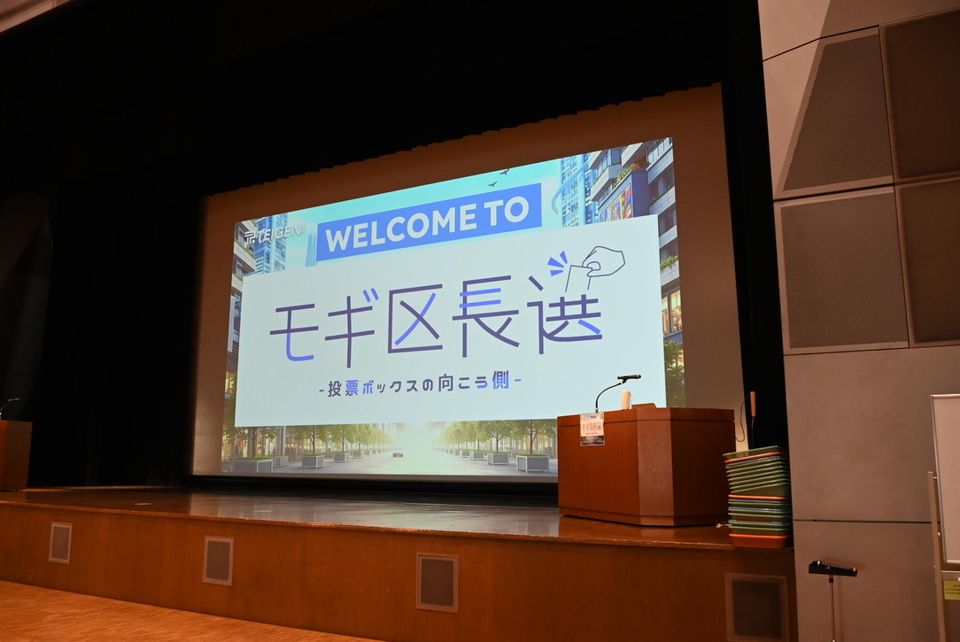
Our work includes the "Mock Ward Mayoral Election", created together with Adachi City Hall, the city assembly, the board of education and the election administration commission, and an outreach class in cleanup education for elementary schools developed with the cooperation of Duskin Co., Ltd.
As an organization we neither support nor oppose any particular party or candidate, and we do not steer anyone's vote. That policy was agreed by our board and is published.We handle politics, but we are not a place that leads young people towards a particular position.
We also take questions from parents through the contact form on this site — including while your child is still deciding whether to take part.