How to hold a mock election in your own townApproaching the local authority and the election commission
10 min read
You may care about local turnout and young people's participation and still not know what kind of project actually teaches anything. Is an event with a ballot box enough, or should it reach local problems and policy-making?
You may have started a proposal and be unclear on the difference between co-hosting, endorsement and support, and therefore on what to ask for. And unsure whether to write first to the election commission, the board of education, the assembly or the city hall.
You may not be able to send the email at all, because being turned down would feel like a judgment on the project and on what you care about. Or you may already have written, heard nothing, and not know what to do next.
And you may worry that involving officials or assembly members will make the project look tilted toward a party or a position.
So this piece covers the first one-page document, choosing who to approach, what to ask in the first meeting, the role of assembly members, and what to do when the answer is no.
Who this is for
- Teenagers who want to hold a mock election where they live
- Anyone approaching an election commission for the first time
- Anyone unsure which department to write to
- Anyone wanting to know the difference between co-hosting, endorsement and support
- Anyone worried a high school student's proposal won't be taken seriously
- Anyone drafting the proposal or the email
- Anyone wanting to involve assembly members and worried about neutrality
- Anyone looking for the next move after being turned down
- Anyone wanting to go beyond the experience of voting into policy-making and deliberation
You do not need all of it at once. Advice on the project, or an introduction to the right department, is a perfectly good place to start.
Being frightened of contacting a local authority is normal
The first approach to a local authority or an election commission is nerve-wracking.
Is the email written correctly? Will the project look naive? What if they say no? — and the message never gets sent.
When it is about something you care about, having the project turned down and being turned down yourself can feel like the same event.
But a first approach is not an examination of whether the project is any good.
The authority has its own responsibility to check public benefit, fairness, safety, neutrality and who does what.
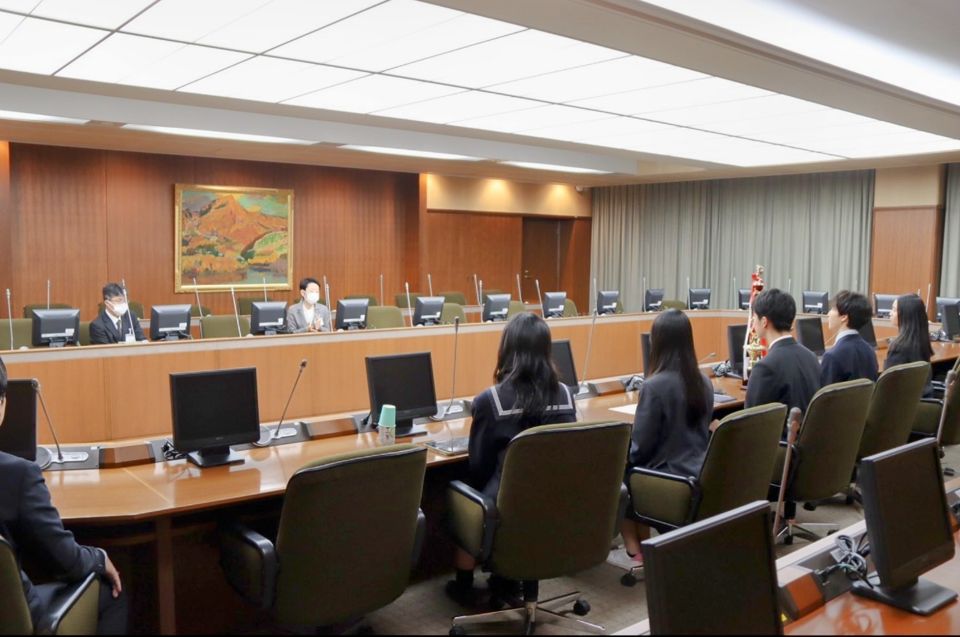
The first meeting is for finding the holes together
You may be hoping for:
- co-hosting or endorsement;
- a venue;
- the loan of ballot boxes and similar;
- publicity;
- getting the word to schools;
- officials or assembly members taking part.
Ask for all of it at once and they have no idea what they are being asked to decide.
Set the aim of the first conversation as:
- confirming you are with the right department;
- learning how far they can be involved;
- hearing their concerns about fairness and safety;
- establishing the procedures and how long approval takes;
- agreeing what to prepare next;
- learning what help other than co-hosting exists.
Our Mock Ward Mayoral Election is run with the Adachi Ward Office, Ward Assembly, Board of Education and Election Administration Commission.
In 2025, thirty middle and high school students took part and eleven ward assembly members helped.
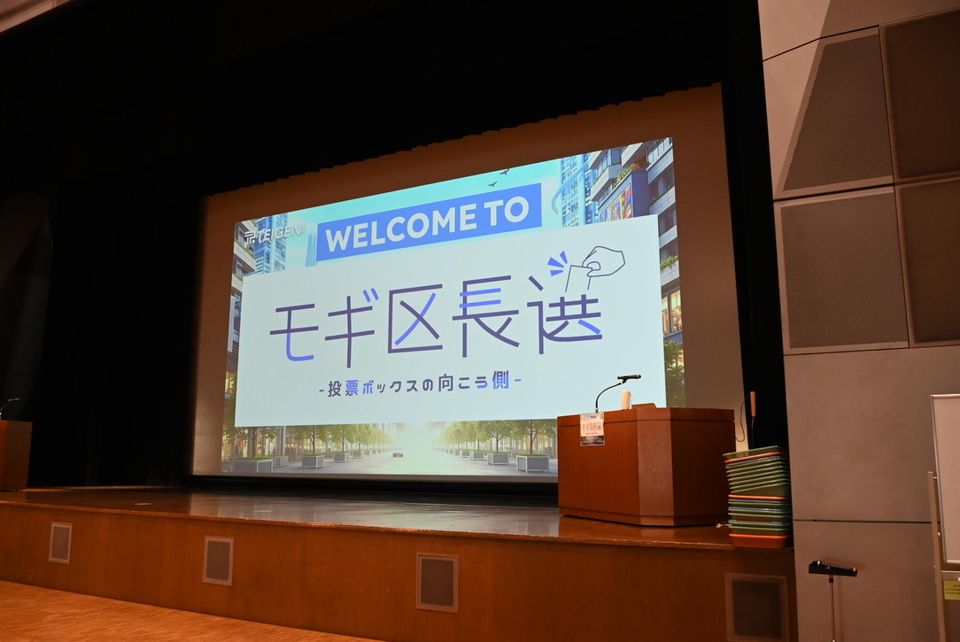
It did not arrive in that shape with the first email.
The first document does not have to be a long proposal
You may assume you need an impressive proposal.
But a long document crammed with everything leaves the reader unsure what they are meant to judge.
Start with one page that explains the whole thing.
| Item | What to write |
|---|---|
| Background | what you think is wrong locally |
| Aim | what you want them to go through |
| For | ages, expected numbers, area |
| Content | what participants will actually do |
| Timing | when you want to hold it and how long you need |
| Organizer | name, who is responsible, how to reach you |
| Neutrality | how parties, candidates and live issues are handled |
| Safety | under-18s, personal information, photography |
| Questions | what you want to ask them |
| Undecided | what is not settled yet |
There is no need to fill in what you do not know.
Saying honestly what is unsettled, and where you need advice, makes the purpose of the conversation much clearer.
Describe the content as what participants do, not as an abstract principle.
In our Mock Ward Mayoral Election, participants:
- analyze a local problem;
- draft a policy;
- stand as candidates;
- write the election bulletin and the speech;
- deliberate with assembly members and other participants;
- compare policies and vote.
That tells an official far more about what help is needed than "an event to raise civic awareness".
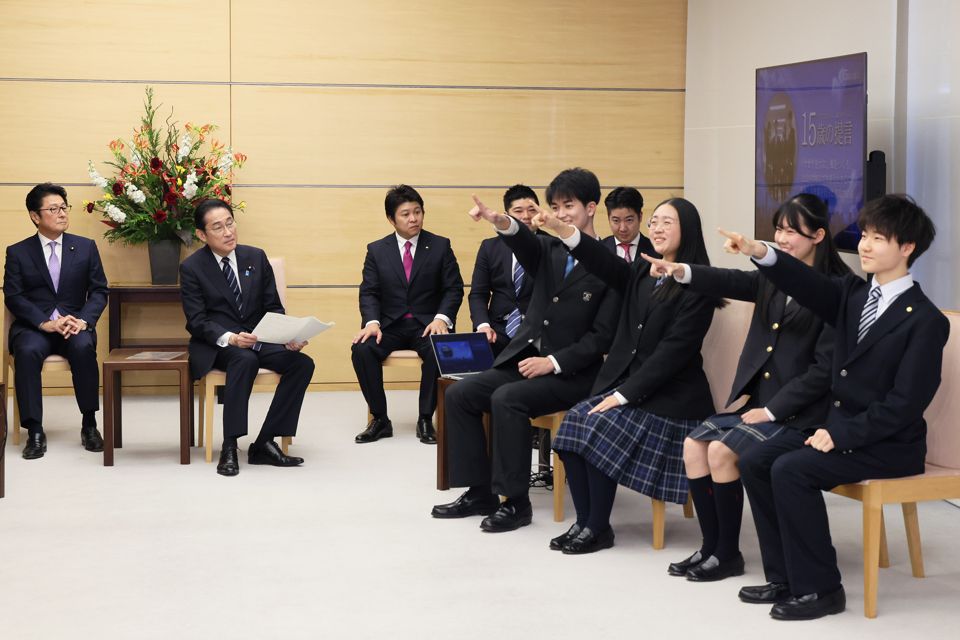
Ask different things of different people
Do not send the same request to every institution that might be relevant.
Match what you ask to what each of them does.
| Who | Mainly ask about |
|---|---|
| Election commission | election awareness work, voting procedure, equipment, neutrality |
| Board of education | educational aims, links to schools, age groups |
| The relevant municipal department | local problems, venues, internal coordination |
| The assembly and its members | questions on policy, deliberation, how things actually are locally |
| School | participants, preparatory learning, supervision, dates |
| Public facilities | venue conditions, equipment, safety |
If you do not know who to write to, give the main switchboard a short summary and ask which department handles it.
Contacting the wrong department is not in itself rude.
Asking politely which department you should be speaking to will often get you passed to the right one.
In the first meeting, ask what is difficult, not what is possible
The urge in a meeting is to sell the project.
But persuade by describing only the good parts and something large surfaces later.
Ask instead what they think is difficult.
Procedure and naming
- what distinguishes co-hosting, endorsement and support;
- what approval using their name requires;
- how long from application to decision;
- how far officials and assembly members may take part.
Content and neutrality
- what to watch when turning a local problem into teaching material;
- how to cite official data;
- how far participants may question members and officials;
- what maintaining political neutrality requires.
Venue and safety
- is there a facility you could use;
- what conditions apply to under-18s;
- can you borrow ballot boxes and polling booths;
- what is required around parental consent, photography and personal information;
- how responsibility is divided in an accident or emergency.
One question in particular gets you a great deal:
If assembly members take part, be clear what their role is
With members present, participants get concrete questions from people who know how things actually work.
It must not become a platform for a party or a candidate.
When inviting them, set out the role:
- question the policies participants built;
- do not steer toward a conclusion;
- do not use it to promote a party or a campaign;
- rather than dismissing a policy, ask what it would take;
- the organizers keep time and run the room;
- distinguish personal views from those of the assembly or a group within it.
Place a member as a judge who knows the answer and it turns into participants guessing what that answer is.
Position them instead as someone to argue with, so participants reopen their own policy.
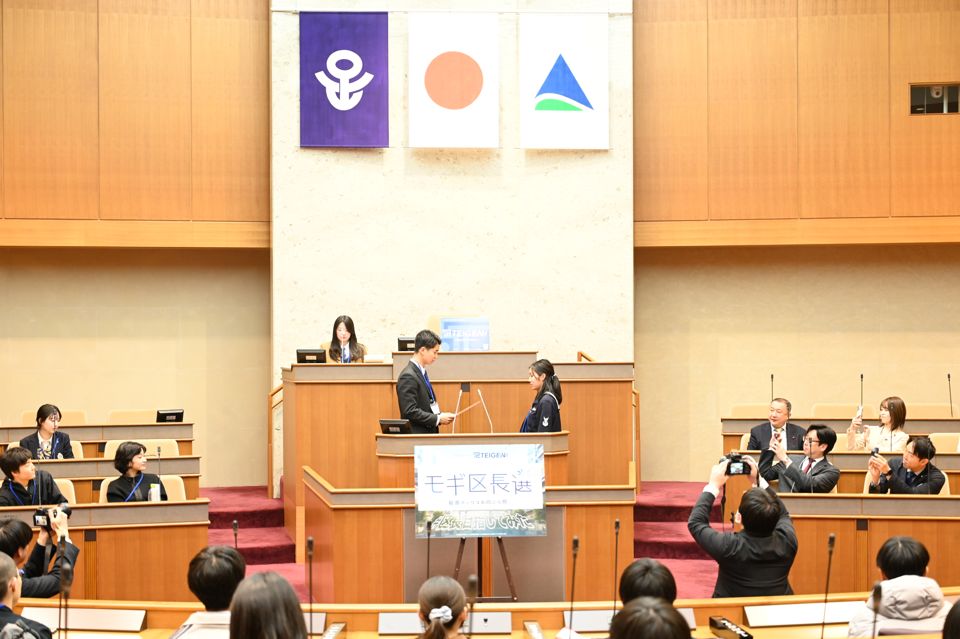
What stays with the assembly
When you approach an assembly, your own enthusiasm is not what moves it.what stays with the assembly — put that into words first and the conversation goes faster.
Progress on assembly reform is ranked each year by the Waseda University Manifesto Institute's Local Assembly Reform Survey. It is assessed in three categories — information sharing, resident participation, and the strengthening of functions — and a mock election counts towards resident participation.
Adachi Ward Assembly is the clearest example. In its own published materials, the assembly lists holding the student-run Mock Ward Mayoral Election, and working to advance civic education, among the assembly reforms it carried out in 2023 under “resident participation” (that year it placed 58th of 1,562 assemblies nationwide and 2nd among Tokyo's special wards).
The chamber is used for a day, members join across party groups, and the record of it stays as part of the reform history. For an individual member, too, a day spent discussing policy with teenagers is something to write up in an activity report.An assembly gains one more fact it can publish, by name, as work done on resident participation — when you are sitting across the table, that is the surest way to put it.
When you are turned down, work out what exactly was refused
Co-hosting or the use of a venue will sometimes be refused.
It is easy then to conclude that they didn't take a high school student seriously, or that the project was worthless.
But their decision involves budgets, dates, fairness, building rules, sign-off and precedent.
Find out which of these was the problem:
- co-hosting in their name;
- endorsement in their name;
- the venue;
- lending equipment;
- staff taking part;
- arranging assembly members;
- publicity;
- the timing;
- safety;
- Neutrality
- budget.
Co-hosting may be impossible while advice on the project or an introduction to another department is not.
The municipal building may be unavailable when a school, a community facility or an online format is not.
But if the problem raised is a serious one about safety or neutrality, rework the project itself, not just the location.
We run a free thirty-minute online conversation, all year round, for teenagers who want to start a Mock Ward Mayoral Election or an Osouji-tai where they live. Book through the site — you do not need a plan, an area or a particular authority in mind yet.