Looking for Somewhere to Take Part as a TeenagerHow to choose, and what to do when nobody is recruiting
6 min read
You want to try something outside school. What arrives first is not a question of drive but a question of information.
You do not know what exists where. Even when you find it, you do not know whether you are allowed in. Plenty of people are standing still in front of the entrance.
This article is written from the side of an organization run by teenagers, about how to look and how to choose.
Who this is for
- Junior and senior high school students who want to engage with society outside school
- People who do not know how to look for a student organization or volunteering
- People who want to know what to check before joining
- People whose target has closed recruitment and who do not know the next move
- People with nobody around them doing the same thing
Where to look | Work outwards from what is nearest
Rather than going straight for a national organization, working outwards from what is nearest finds you more.
| Where to look | What you find | How easy it is to act |
|---|---|---|
| Teachers and careers guidance at school | Places students have joined before | Fastest of all |
| The city's public information and website | Open-call council members, youth programmes | Medium |
| Library, community centre, children's centre | Local activity, noticeboards | Medium |
| Student council and clubs | Things you can do inside school right now | Fast |
| An organization's own website | National student organizations | Depends on the season |
What is easily missed is open calls from local government. More and more municipalities hold councils that listen to children and young people, or run youth programmes. Try searching for your city's name plus "youth" and "opinion", or plus "open call".
Asking a teacher works too. If a student has done the same thing before, you can follow that route directly.
What to check before choosing | Five things
Before the look of the organization or its record, check the following.
- Whether the person in charge is named — the representative's name, and a contact address for the organization
- Whether you can locate where it meets — public facilities, schools, online
- How much time it takes — hours per week, busy periods, how exam weeks are handled
- Whether it costs money — participation fees, who pays travel
- Whether you can leave — whether how to quit is explained
The fifth is in fact the most important. Somewhere that does not write down how to quit is somewhere to be careful about joining.
If the only contact is a personal social media account, talk to a parent without fail. How the parent's side thinks about it is set out in When Your Child Starts a Student Organization.
It is fine to look while "what I want to do" is undecided
Some people stall while looking, trying to settle first what it is they want to do.
It is fine not to have decided. you cannot know what suits you until you try.
Instead, try looking in these terms.
- Look by "what I have been wondering about" — the town, school, the environment, politics, education
- Look by "the kind of work I would like to do" — talking with people, writing, planning, moving your body
- Look by "how far I can go" — on the way to school, within reach at a weekend
Settle even one of the three and the words to search with appear.
Three moves when nobody is recruiting
Even when you find an organization you want to join, the intake period may not line up. Most student organizations recruit new members only about once a year.
There are three moves at that point.
- Ask about observing or attending an event — public events often run even when recruitment is closed
- Ask when the next intake will be — leave your contact details and you may be told
- Start one yourself — this is sometimes the fastest of all
The third may sound reckless, but TEIGEN JP itself began that way. There was nowhere to join, so we made one — that is what actually happened.
How to start is set out in Starting a student organization in high school, as what to do in the first three months.
The slump that comes after joining is not your fault
A while after joining, a period comes when people drift away and discussions stop moving.
It comes to almost everyone, and it does not happen because your commitment is lacking. Almost always it is structural: roles are undefined, and there are no deadlines.
The causes and the way back are set out in Why nobody joins your student organization, or nobody stays.
In our case
TEIGEN JP is a student organization founded in June 2023 in Adachi City, Tokyo. Thirty-eight high school and university students (as of June 2026) take part, from Tokyo and the three neighbouring prefectures.
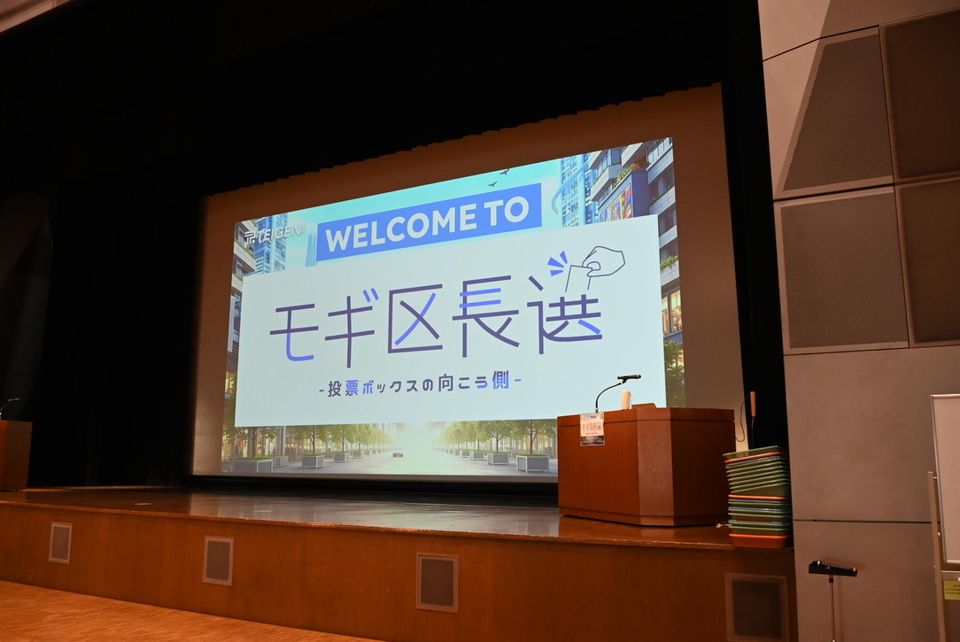
Our work is the hands-on civic education programme "Mock Ward Mayoral Election", created together with Adachi City Hall, the city assembly, the board of education and the election administration commission, and "Protect Our Town! Osouji-tai", an outreach class in cleanup education for elementary schools developed with the cooperation of Duskin Co., Ltd.
- New member recruitment in Tokyo is, as a rule, once a year
- Start-up consultations for people who want to begin in their own town are open all year: 30 minutes, free, online
In a start-up consultation we share the model, materials and operating know-how of the Mock Ward Mayoral Election and Osouji-tai, and stay with you until launch. It is fine if neither the plan nor the area is settled.
If you want to know what the work is really like before joining, readSecond to none. It is a frank document about the responsibility, the workload and what the organization owes you, and it does not only write down the good parts.
Enquiries are handled through Contact Us.