Taking up local issues in inquiry-based studyDesign from theme-setting to presentation
6 min read
More schools are taking up local issues in inquiry time. They are close at hand, material is available, and the people involved are easy to meet.
Yet many teachers finish the unit feeling it amounted to research and a summary.
Another common complaint is that final proposals cluster around posters, social media campaigns and one-off events.
This article looks at why local-issue inquiry stalls at research, and how to design a unit in which students get as far as making a decision.
Who this is for
- Junior high and high school teachers taking up local issues in inquiry time
- Those whose students stall at the theme-setting stage
- Those who want to know why proposals skew towards publicity and awareness-raising
- Those considering working with local government or the council
- Those unsure how to design assessment for inquiry
- Those who want to connect civic education with inquiry
It stalls at research because there is no moment of decision
Local-issue inquiry usually proceeds in this order.
- Research the local issue
- Summarise the current situation
- Think of solutions
- Present
It looks like a natural flow, but there is no moment where they must choose.
The issue is given, solutions may be imagined freely, and the unit ends once they present. Since no one is in conflict and no limited resource has to be allocated, proposals settle on things that are simply good.
Posters and social media campaigns get chosen because they need no money, no authority, and draw no objection.
| Stage | Research-based | Decision-based |
|---|---|---|
| Issue | Given | Chosen from several |
| Constraints | None in particular | Budget, timeframe and target group are fixed |
| Others | Exist in the reference material | Are in the room and object |
| Conclusion | Each student's own proposal | One is chosen |
| How it ends | Presentation | A choice, and why the others were not chosen |
Set the theme from the person who is struggling
When theme-setting stalls, students have usually started from a field: disaster preparedness, the environment, ageing, the shopping street. A field is too large to know where to begin.
So start from a person rather than a field.
- Who in this area is struggling right now?
- When and where does that person struggle?
- What happens if the situation continues?
- Who has to decide for it to change?
The last question is the important one. Looking into who has to decide leads students naturally to municipal structures, budgets, ordinances and the council.
Starting from a field leads to collecting material; starting from a person leads to the structure of decision-making.
Set the constraints first
Let students think freely and proposals turn idealistic, because nothing constrains them.
Early in the unit, give them these three.
- budget. — the upper limit of what can be spent (modelled on the scale of a real municipal program)
- Weeks — by when the effect has to show
- For — whom the measure is for. Everyone is not an option
Constraints force students to compare for the first time. Whether the same one million yen goes to older residents or to children is not a question research alone can answer.
A proposal no one opposes never gets sharpened
What works best for giving students the experience of deciding is creating a setting where others put questions to them.
When proposals are compared in class and one is settled on by vote, students go back and gather evidence to defend their own.
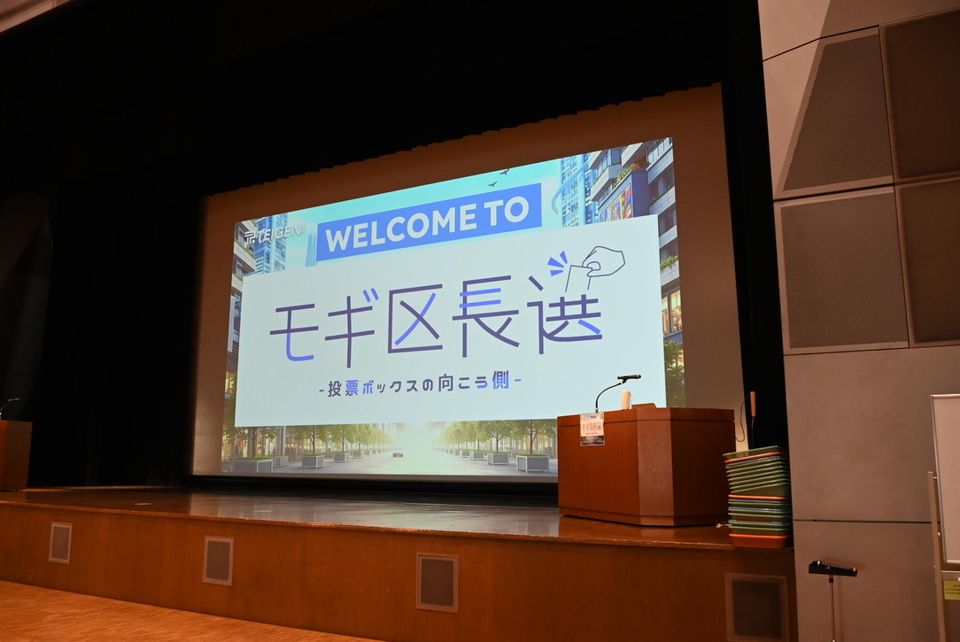
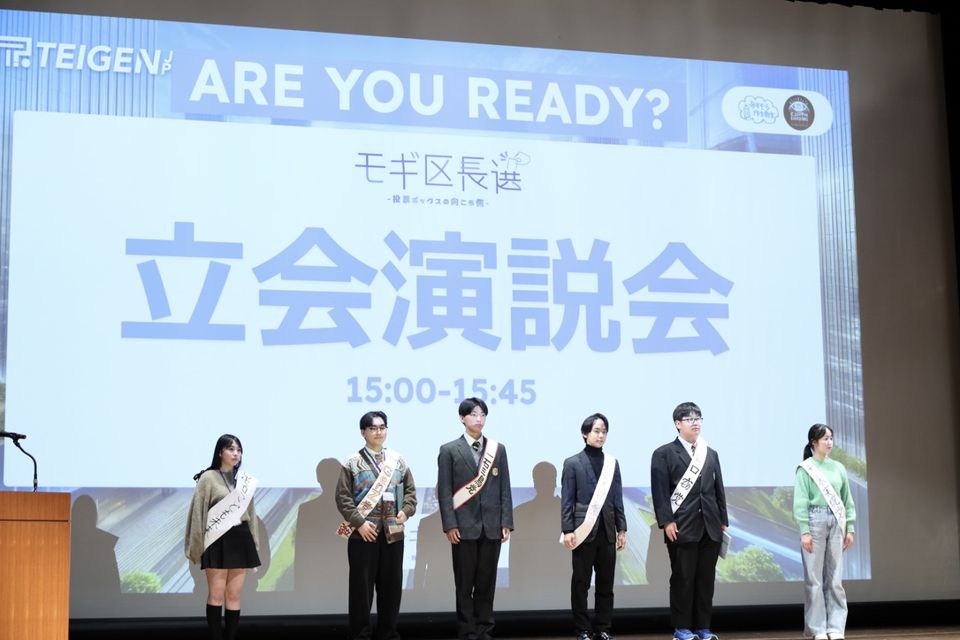
The Mock Ward Mayoral Election that TEIGEN JP runs in Adachi City turns this entire structure into an experience. Participants proceed in this order.
- analyze a local problem;
- draft a policy;
- stand as candidates;
- write the election bulletin and the speech;
- deliberate with assembly members and other participants;
- compare policies and vote.
It is run in co-creation with Adachi City Hall, the city council, the board of education and the election administration commission. The 2025 edition drew 30 junior high and high school students, with 11 city council members taking part.
The questions council members ask are not in any reference material. Where will the funding come from? How will you explain this to residents who object? Answering questions of that kind is what changes a proposal.
Fitting it into the school timetable
In practice, it is hard to secure a solid block of inquiry periods.
There is a way to insert just the moment of decision without rebuilding the whole unit.
| Periods available | What to insert |
|---|---|
| 1 | Compare proposals under constraints and settle on one by vote |
| Two periods | Policy drafting, and answering questions from others |
| Four periods | The full arc from issue analysis through candidacy, deliberation and voting |
TEIGEN JP's outreach program for junior high and high schools runs 2–4. The cost is 30,000–50,000 yen per session (plus travel and venue costs at actual expense). If only one period is available, we take it on as a talk rather than a lesson.
What we ask of the school is to arrange the venue and date and to distribute a pre-session questionnaire (we may also ask you to print materials for the day). We bring the teaching materials, the facilitation and the ballot boxes.
Secure neutrality through what you take up
Some teachers worry about political neutrality once local issues are involved.
TEIGEN JP works towarddoes not take positions on real parties, candidates or contested issues. Because students compare policies they drafted themselves, they experience the structure of decision-making without real political conflict entering the classroom.
As an organization, we also publish our policy of neither supporting nor opposing any particular party or candidate and of never steering anyone's vote.
Our thinking on neutrality is set out in the article on handling politics in schools.
Assess the process, not the conclusion
Assessment in inquiry is hard because people try to grade proposals on quality.
A decision-based design increases the criteria you can assess.
- Whose problem did they define the issue as?
- Under the constraints, what did they give up?
- How did they respond to opposing views?
- Can they explain the proposals they did not choose?
- After deciding, did anything in their thinking change?
All of these appear in the process rather than in the polish of the written proposal. Keeping records along the way, not just the final presentation, makes assessment easier.
Enquiries from schools and boards of education are received through the form on our website. Mid-year is fine, and so is getting in touch before the timing is decided.