Home / SPEAKING
Speaking
Youth political participation,
from the ground and from the rulebook.
From a meeting room in the Prime Minister's Office to a middle school classroom. We come with both: programs actually delivered alongside government and assemblies, and institutional research such as the youth council model. We speak in English, and we welcome invitations from outside Japan — talks, classes, panels, on-stage conversations, interviews and broadcast.
Speaking 40 engagements(as of July 2026)◆The Prime Minister's Office, a conversation with Mercy Tembon, then Vice President of the World Bank, Junior Chamber International Japan and others
Speaker Profile
Speaker Profile
Soka Horii
Founder and Executive Director, TEIGEN JP | Faculty of Policy Management, Keio University
Born 2007, from Adachi, Tokyo. Founded TEIGEN JP in his first year of high school and co-created the Mock Ward Mayoral Election — civic education in which teenagers draft policy and stand as candidates — with Adachi Ward, Setagaya Ward and the Tokyo Metropolitan Government among others. Nine awards and selections as of June 2026, including first place nationally at the National High School Policy Championship (supported by the Cabinet Office and MEXT), and the Special Prize in the Tokyo round and the NHK President's Award in the national round of the High School Students' Speech Contest. Frequent speaker: put a policy proposal to the then Prime Minister, was in conversation with Mercy Tembon, then Vice President of the World Bank, and appeared in conversation with Ryosuke Takashima, Mayor of Ashiya. Studied in Ontario, Canada. Now in his first year at the Faculty of Policy Management, Keio University, researching the institutional design of a youth council model.
What gets talked about is the process, not the success.Founding it, negotiating, failing, being torn, and the daily work of growing an organization — all of it aimed at the moment a listener thinks: I could do something too.
In Numbers
The numbers are how many times we showed up.
Definitions and sources for these figures are given in Results and Recognition. Speaking engagements are counted by us.
Topics
Speaking Topics
Not a talk people call nice and forget.
Youth political participation, civic education, building an organization. Every theme combines what we have actually run with how we think institutions should be designed, and every one is worked backward from what the audience does the next day. Length, audience and angle are all adjustable.
Choose a theme by what you want and who is listening.
At universities we reshape it for the occasion — orientation events, careers education, teacher-training courses, public lectures, faculty and staff development, and support for student unions and societies. The weight of the talk shifts depending on whether it is for students or for staff, so just tell us which.
01Most RequestedRisk, careers and leadership
From being fifteen and angry
to the Prime Minister's Office.
How one high school student got society to move.
ForMiddle school, high school and university students; orientation; careers education; training for younger staff
It starts with what stung in Adachi: founding the organization in the first year of high school, negotiating with the ward office and the assembly, launching the Mock Ward Mayoral Election, winning the National High School Policy Championship, making a policy proposal at the Prime Minister's Office. Not only the parts that look good — also the stretch when nobody joined, the plans that went nowhere, and the conflicts that came from not yet knowing how. The whole process by which a fifteen-year-old who was nobody got a hearing.
That you do not wait for the right circumstances or a title — the first step comes out of the question already in you.
Good forOrientation, careers education, inquiry-based learning, leadership training, anniversary events, training for student councils and student organizations
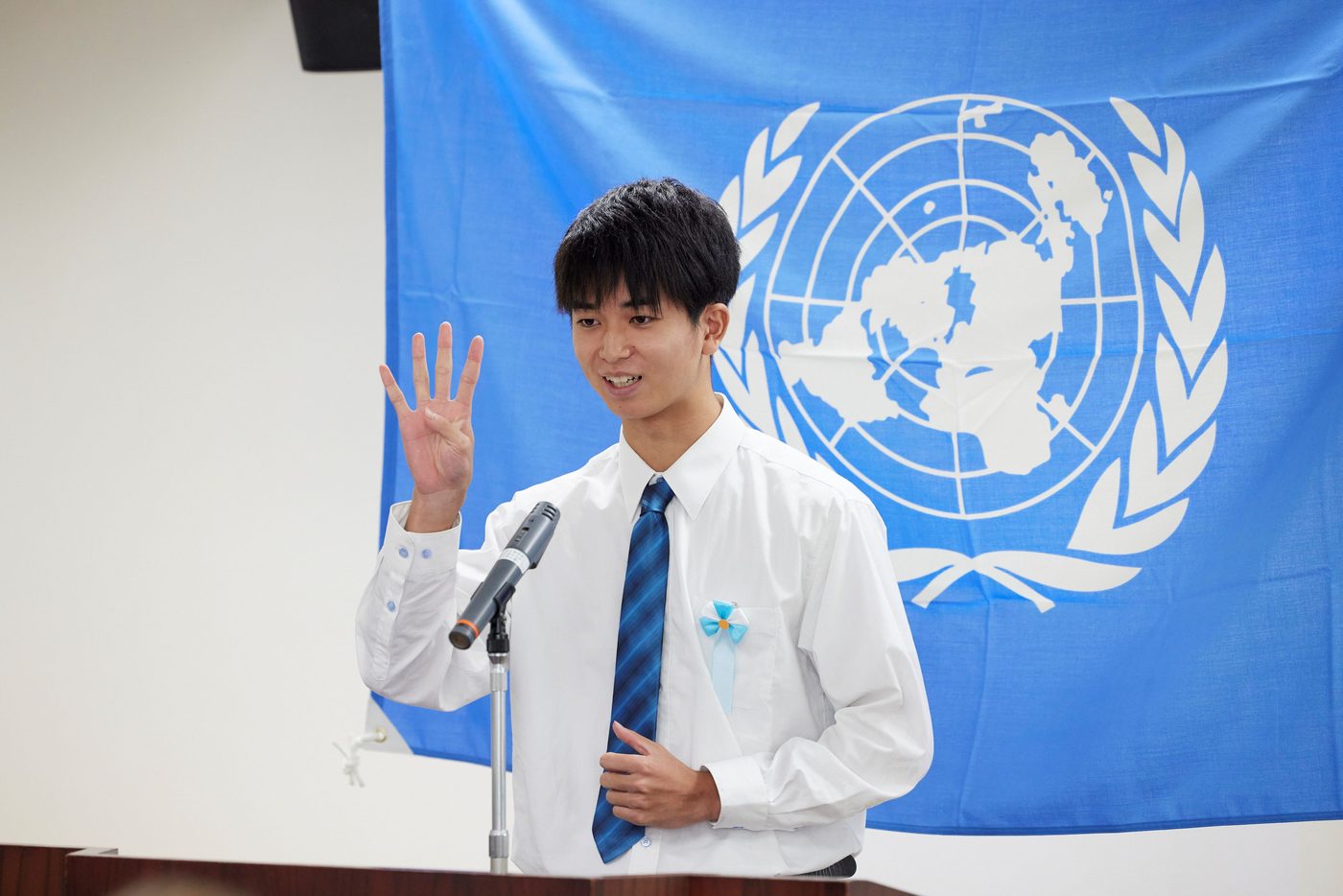
02Civic education and political participationWhy do teenagers end up watching politics rather than doing it?Not a shortage of motivation — a structure that decides who gets to take part.
ForSchools, boards of education, municipalities, assemblies, universities and research institutions
Is it really enough to explain teenage disengagement by a lack of interest or knowledge? Drawing on the Mock Ward Mayoral Election, this looks at what happens to the distance between a teenager and politics when you design the whole experience: researching policy, drafting it, standing, arguing, voting.
The shift from civic education that raises awareness to civic education that designs a chance to be responsible for something.
CoveredThe structure of teenage disengagement; hands-on civic education; deliberation and consensus-building; working with schools and government; measuring effect
03Youth participation and institutional designThe youth council model — the leading edge of youth advocacyYouth participation that does not stop at "we listened".
ForMunicipalities, assemblies, public servants, universities, research institutions and nonprofits
Surveys and listening sessions leave youth participation as a one-off event. This sets out the youth council model — open application plus random selection, a committee structure, a duty on the administration to respond, the right to demand reconsideration, and a link into schools — as a way of wiring young people's views into decisions that actually get made.
How to design institutions that turn teenagers from people who are consulted into people who take part in making policy.
CoveredYouth advocacy; youth councils; representativeness; administrative accountability; connecting to ordinances and formal advisory bodies
04Student organizations and nonprofitsEnthusiasm alone does not keep an organization alive.Turning students' sense of mission into something that can keep running.
ForStudent organizations, nonprofits, youth organizations, student councils and student unions
You can gather serious people and still lose the organization, if roles are vague, meetings are empty, and everything lands on the person in charge. Using how TEIGEN JP is actually run: designing roles, structuring meetings, one-to-ones, evaluation, delegating authority, governance, and handing over to the next generation.
How to build an organization that does not run on anyone's self-sacrifice, where responsibility and growth go together.
CoveredRoles and responsibility; meeting design; delegation; psychological safety alongside high standards; getting out from under the founder; succession
05Culture and brandingNot an organization people want to join — one they want to stay in.Designing a brand that produces admiration and belonging.
ForStudent organizations, nonprofits, companies, recruiters and communications teams
Tidying up a logo and a social feed does not make a strong brand. This is about tying mission, language, design, behavioral principles, what it feels like to be a member, and outward communication to a single idea — so that a recognizable character accumulates inside and outside the organization.
Brand design that changes how people behave and where they feel they belong, rather than communications that tidy up appearances.
CoveredMission and putting it into words; culture; the recruitment experience; internal branding; web and social; consistency
Track Record
Selected Engagements
A selection from forty speaking engagements as of July 2026. From the Prime Minister's Office to a middle school classroom — change the room and you change what needs saying.
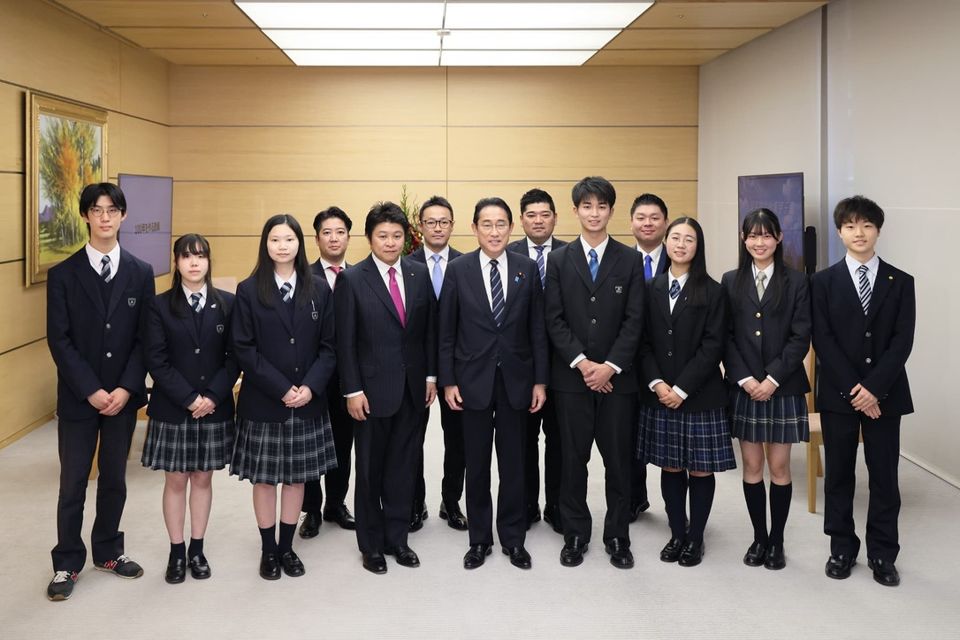
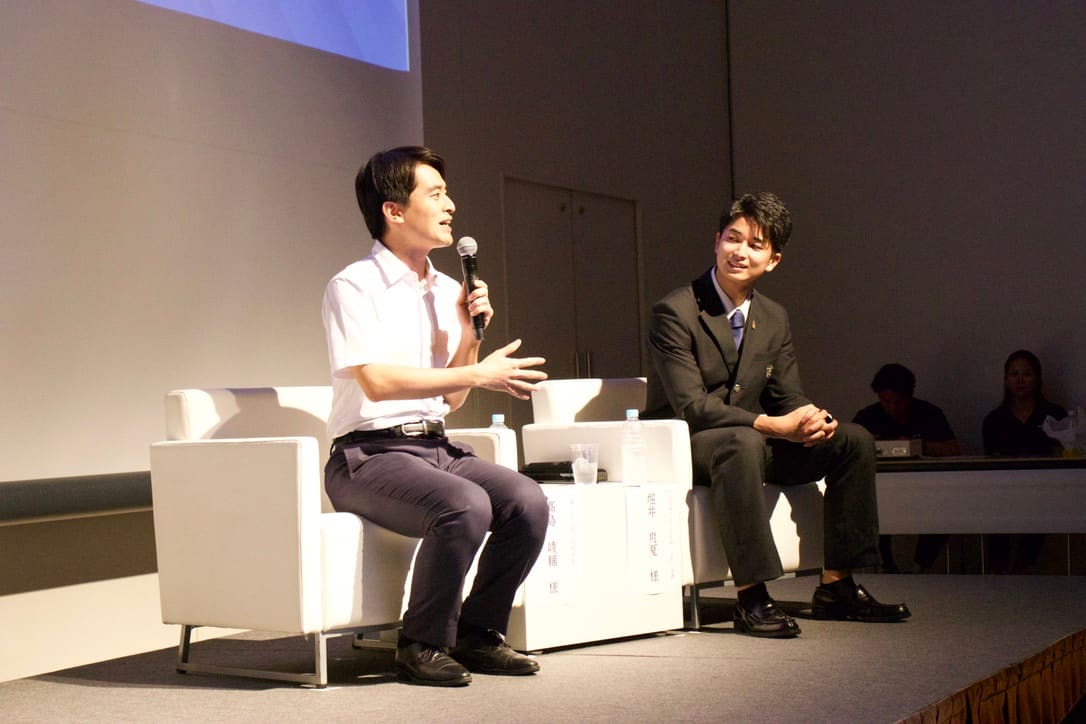
Government
- 2024Youth Leader Forum, Association for Promoting Fair Elections and the Ministry of Internal Affairs and Communications (November, representing Tokyo)
- 2026Citizenship Education Meeting, Japan Citizenship Education Forum (March)
Assemblies and schools
- 2026Study session for members of the Yashio City Assembly, Saitama (June)
- 2026Aichi Prefectural Tokai Shofu High School (July)
- 2026Adachi Municipal Fourth Middle School (March)
Business bodies and conferences
- 2026Summer Conference 2026, Junior Chamber International Japan (July) — on stage with Kazuhiro Fujihara
- 2025Adachi 100-Person Meeting — its youngest ever guest speaker
International
- 2024Meeting with Stephen Mensah, Executive Director of the Toronto Youth Cabinet (August, Toronto, Canada)
- 2025In conversation with Mercy Tembon, then Vice President of the World Bank (June)
- 2026"Hints for How to Live": in conversation with the Mayor of Minoh and the Mayor of Miyake (April, Ikeda, Osaka)
From the Floor
The stage is not the whole of it — the room matters too.
Before and after, there is time to talk with participants and other organizations. We would rather people left carrying a question that appeared in the room than sat through something one-way.
* Years, organizers and titles are as they were at the time.What to ask a teenage speaker to talk about →
How to Request
Formats, and how to book.
If this is your first time, we will help build the program with you, and we are flexible with schools and nonprofits. Organizers outside Japan are very welcome: we correspond, prepare and speak in English throughout.
Contact Us
Send us an outline and your preferred dates, by form or email.
First reply
Normally within three working days.
Agreeing the details
Theme, length, audience, format, fee and travel.
Planning and preparation
We meet online if it helps, and prepare the materials.
The day, and afterward
Where useful, we share the questionnaire results and a written report.
FAQ