Planning Civic Education and Voter Awareness at a Local AuthoritySetting the target group, the timing and the outcome
5 min read
Wanting to raise turnout among younger voters is a problem many local authorities carry.
At the same time, the officials closest to the work are the ones who feel most keenly that increasing the volume of leaflets does not move the number.
Turnout among 18- and 19-year-olds at the 2022 House of Councillors election was 34.49% (Ministry of Internal Affairs and Communications). Read that figure as proof of indifference and the response tilts towards publicity.
This article sets out what to decide when planning the work, in the order of target group, timing, outcome and arrangement.
Who this is for
- Election administration commission officials planning voter-awareness work aimed at younger voters
- Local authority and board of education officials responsible for civic education
- Assembly and policy staff considering mechanisms for youth participation
- People considering co-hosting with, or commissioning, an outside organization
- People unsure how to explain the results of the work
Target group | Aim earlier than the eve of turning 18
Awareness work tends to concentrate on informing new voters.
But changing behaviour at the moment you gain the vote is hard for someone who has never taken part before.
A rough guide for deciding the target group is as follows.
| For | What suits it | What you can expect |
|---|---|---|
| Elementary school | Engagement with public space | A sense that the place is theirs |
| Middle school | Comparing policy and deciding | The experience of choosing |
| High school | Drafting, standing for office, deliberating | What participants experience |
| New voters | Informing them of the procedure | Getting to the polling station |
Informing new voters is necessary, but on its own it reaches only those who are already interested.
Timing | Do not crowd it against the election
Demand for awareness work rises before an election, but a school's annual plan is set in the previous year.
Ask just before an election and in most cases the class time cannot be found.
- If you are working with schools, approach them by the autumn of the previous year
- Design it as year-round work that does not depend on when elections fall
- Attach it to an event the school already holds, such as the student council election
Almost every school holds a student council election each year. Attach preparatory learning to it and it becomes an annual opportunity whether or not there is a public election.
Outcome | Do not measure by turnout alone
A single piece of work cannot move turnout, and the causation cannot be shown.
So hold separate measures that can be explained as programme outcomes.
- Number of participants, and the spread of their schools and year groups
- How many participants drafted a policy, and how many compared them
- How many exchanges with assembly members and officials
- Whether, afterwards, participants can describe a local issue in their own words
- Whether it led to the work continuing the following year
Keep turnout as the long-term measure and explain the short term by the quantity and quality of experience. That stands up better in reporting to the assembly and within the authority.
Arrangement | Design co-hosting, endorsement and cooperation separately
When you work with an outside organization, putting everything into a single contract from the start stops the coordination.
Design the forms of involvement separately.
| Form | Burden on the authority | When it fits |
|---|---|---|
| Advice | Low | A first-year trial |
| endorsement in their name; | Low | When you want to help reach schools |
| lending equipment; | Medium | When ballot boxes and voting booths are needed |
| Co-hosting | High | When the city hall or council chamber is used |
| Commissioning | High | When it is positioned as ongoing work |
Rather than co-hosting from the first year, beginning with advice and an endorsement to build a record can make internal agreement easier.
An example in practice
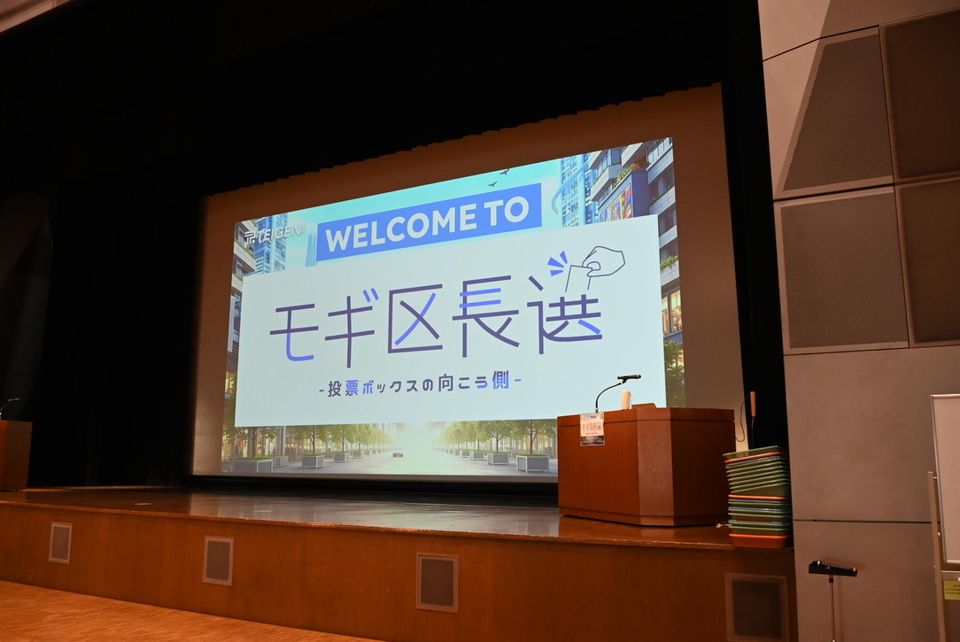
TEIGEN JP runs the hands-on civic education programme "Mock Ward Mayoral Election" together with Adachi City Hall, the city assembly, the board of education and the election administration commission. Participants analyse local issues, draft policy, stand as candidates, produce an election bulletin and a speech, deliberate with assembly members and other participants, then compare the policies and vote.
The 2025 edition drew 30 junior high and high school students, with 11 city council members taking part.
What assembly members add is that participants get asked "where is the money coming from?" and "how will you explain this to residents who object?" Having answered a question that was not in the handouts is what changes a proposal.
As institutional design research, we publish the Adachi City Youth Council Proposal in five stages. It runs from setting up a round table through a partnership agreement and an ordinance to becoming a permanent advisory body.
Handling neutrality
In work a public body is involved in, guaranteeing political neutrality is always at issue.
TEIGEN JP works towarddoes not treat real parties, candidates or the pros and cons of live issues. Because participants compare policies they have drafted themselves, only the structure of decision-making is handled, without bringing real political conflict into the room.
As an organization, too, we neither support nor oppose any particular party or candidate, and our policy of not steering anyone's vote was agreed by our board and is published.
Co-hosting and endorsement, joint voter-awareness work and research collaboration are handled through Contact Us. It is fine if the budget and the timing are not yet fixed.