Political neutrality in schoolsWhat a lesson can do, and what to avoid
9 min read
You can accept that civic education is needed and still be cautious about specific political questions, given the criticism and the parental inquiries that neutrality can attract.
You may want a guest speaker and worry that they or their organization will bring a political position into the room. You may want to present several positions and be unsure how much material makes it "fair".
Or the opposite: you may be uneasy that so much attention to neutrality has left the lesson as an account of the electoral system, with no time for students to give a view or think about a position other than their own.
Should you stop a student who states a strong political view? May a teacher never say what they think? Is dealing with a real political question a problem in itself? None of these answers to a simple yes or no.
So this piece sets out, following Article 14 of the Basic Act on Education and the Ministry's notices, how to check the subject, the materials, what teachers and speakers say, and how the discussion is run.
Who this is for
- Teachers hesitating over civic education because of neutrality concerns
- Anyone who has to explain the approach to senior leadership or parents
- Anyone wanting to bring a real local or political question into a lesson
- Anyone unsure how to handle a question about a real party or policy
- Anyone wanting to know how far a teacher may state their own view
- School staff considering a guest speaker or a student organization
- Anyone wanting to check whether their materials or facilitation lean one way
The worry is a reason to work through what needs checking, not a reason to give the lesson up.
Caution about politics is the correct instinct
Most people feel that politics and elections need more careful preparation than an ordinary lesson.
Teachers and schools are responsible for not pressing a political position on students, and for keeping the learning environment fair across families who think very differently about politics.
So there is no need to treat that anxiety as excessive timidity.
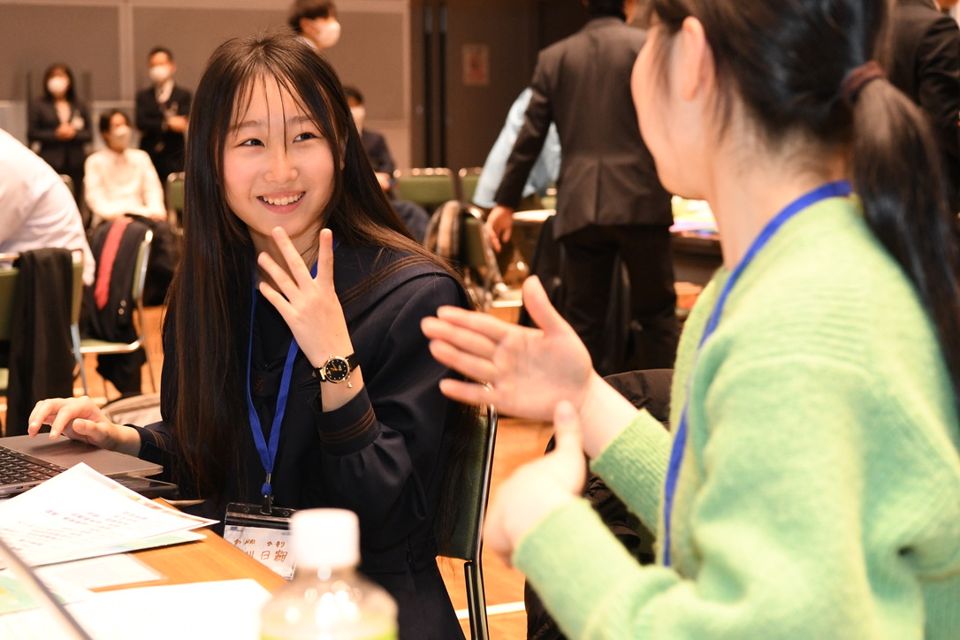
On the other hand, if political material and differences of view are excluded entirely to avoid criticism and misunderstanding, civic education is reduced to an account of institutions.
The choice is not between dealing with politics and not dealing with it.
- who runs the lesson;
- what material is used;
- how multiple positions are handled;
- what students are asked to do;
- what is done to prevent steering toward a conclusion.
What is needed is putting concrete procedures in place:
Article 14 does not rule out political education
Article 14 of the Basic Act on Education states that the political literacy necessary for a citizen of good sense shall be respected in education.
It also provides that schools shall not carry out political education or political activity for the purpose of supporting or opposing a particular party.
The two have to be read together.
Learning about politics is not itself prohibited.
What must be avoided is using school education to move students toward supporting or opposing a particular party or candidate.
The Ministry's notice on political literacy education in high schools and on political activity by high school students likewise sets out the importance of dealing with real political matters while maintaining neutrality, of understanding differing views, and of examining one's own view critically.
Neutrality is asked of the procedure, not of the students' opinions
As an organization, TEIGEN JP neither supports nor opposes any party, political body or candidate.
That is not a demand that participating students hold no political views, or stand at the midpoint of every position.
Students have their own experience and their own values.
Reading the same material, they will naturally weight different problems and different policies. Trying to gather everyone into one view, or into a "neutral opinion", produces a lesson that suppresses having a view at all.
What is asked of the people running the lesson is procedure:
- do not give one view more detailed treatment than the others;
- do not react differently depending on a student's position;
- do not label an opposing view immature, immoral or irrational;
- do not ask which party or candidate anyone supports;
- do not require anyone to state a view;
- check what a claim rests on;
- allow people to change what they said or reserve judgment;
- allow it to end without agreement.
Check the subject, the materials and the facilitation separately
You cannot judge by subject alone — political therefore dangerous, school life therefore safe.
Even a familiar subject causes problems if it is steered toward a single conclusion.
When designing the lesson, check the subject, the materials and the facilitation separately.
On the subject
- is its purpose to evaluate a particular party or candidate;
- does it expose a student's or a family's political position;
- is it concrete enough for this year group to work with;
- is it framed as having one right answer;
- does it allow several positions and interests to be considered.
On the materials
- are fact, forecast, evaluation and opinion distinguished;
- can the sources be checked;
- is the information all favorable to one position;
- is any group being flattened into a caricature;
- is emotive language steering the judgment;
- are official positions distinguished from those of individuals and organizations.
On the facilitation
- are the teacher or speaker talking too much;
- is the same handful of students doing all the talking;
- have questions turned into criticism of a person;
- is not speaking an accepted choice;
- is the secrecy of a vote or a stated view protected;
- is changing your mind allowed;
- is what a view rests on being checked, rather than how forcefully it is held.
Dealing with real politics is not the same as steering a vote
It is easy to fear that touching a real political question breaches neutrality by itself.
But thinking about a district's population, welfare, education, transport or environment is not the same as urging a vote for a party or a candidate.
In our school mock elections, the default design does not take for-or-against positions on real parties or candidates, so that nobody is steered and the attention stays on how policy is formed.
What to avoid:
- a speaker recommending a particular party's or candidate's policy;
- indicating who to vote for;
- presenting only information favorable to one position;
- treating an opposing view as morally inferior;
- asking which party or candidate a student supports;
- pressing a quiet student to declare a position.
What can be designed:
- establishing what the problems in the area or the school are;
- working out several possible policies;
- setting out who benefits from a policy and who bears its cost;
- re-examining a proposal from another position;
- amending a policy after taking questions;
- comparing several proposals and putting the reason for a decision into words.
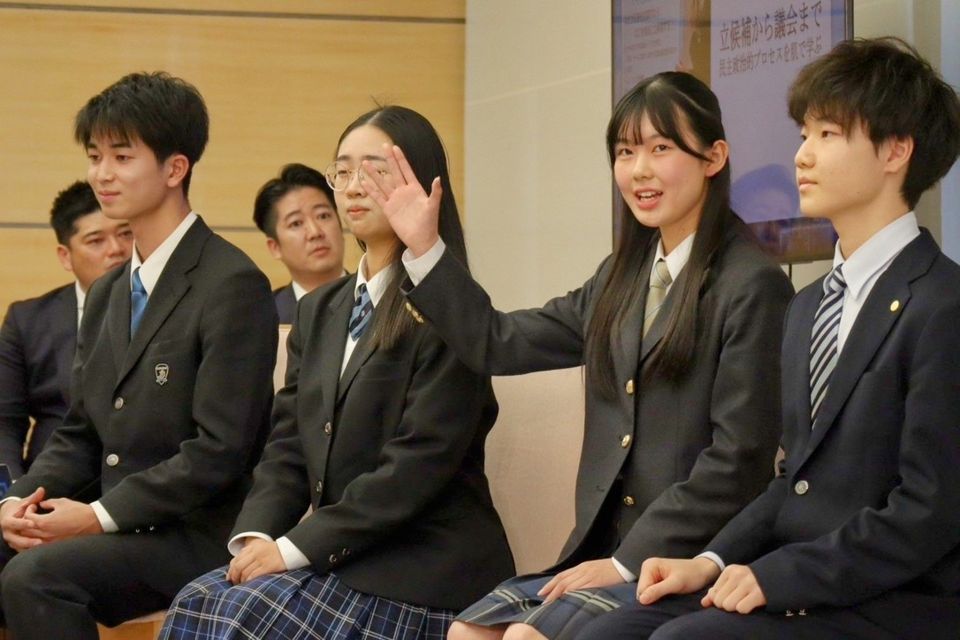
Our approach does not imply that the law prohibits every real political question.
It is the design we adopt when entering a school as an outside organization, so that policy-making and decision-making can be learned without any tie to a political position.
When a student asks about a real party or policy
Even if the lesson does not touch real parties or candidates, students will sometimes ask.
That may be because they are connecting the lesson to real politics. There is no need to shut the question down.
But a teacher or speaker should not return their own for-or-against view as the right answer.
The basics:
- establish what the question is actually asking;
- separate checking a fact from making a value judgment;
- establish how far it relates to the aim of the lesson;
- do not assert a fact you cannot verify;
- do not answer in a way that indicates who to vote for;
- point to official sources and to more than one of them where useful;
- if it cannot be handled on the spot, check and answer later.
What to establish before inviting a guest
Bringing in an outside organization does not mean the school stops having to think about neutrality.
Nor does the school have to carry all of it alone.
At the planning meeting, establish at least:
- the aim of the lesson;
- the problem being dealt with;
- the materials and their sources;
- how real parties, candidates and live issues will be handled;
- what students will be asked to say and to hand in;
- how discussion and questions will be run;
- what happens to the result of the vote;
- what happens if an unexpected political statement is made;
- the respective roles of the teacher and the guest;
- photography, recording and publication.
"We will take care over neutrality" gives a school nothing to judge by.
To talk this through, set out the lesson theme, the year group, the problem you want to deal with and what is being raised internally, and use the contact form.