When a Company Works with TeenagersDesigning co-creation that does not end at sponsorship
4 min read
Work themed on education and raising the next generation meets little internal opposition, and at the same time is hard to keep going.
The reason is plain. The feeling of having done something good arrives in the first year, but year two comes round with no one able to say what each side was left with.
This article sets out what to decide first when working with a teenage organization.
Who this is for
- Staff at companies and foundations designing CSR or CSV around education and the next generation
- People looking for involvement a step beyond sponsorship or donation
- People unsure how to explain the results internally
- People who want to book a teenage speaker for staff training or an internal event
- People who want to rebuild an effort that ended after one round
Choose one of three forms of involvement, without mixing them
Involvement with a teenage organization falls into three kinds of different character. Mix them and none of them works.
| Form | What the company gives | What the company is left with | The stage it suits |
|---|---|---|---|
| Sponsorship and donation | Money | A record of support, and a report | The way into a relationship |
| Co-creation (programme development) | Expertise and people | The material and knowledge developed | When continuation is assumed |
| Speaking and training | A place and time | A perspective staff take away | When you want to bring it back inside |
Many efforts take the shape of sponsorship while intending co-creation, and all that is left is a report.
If it is to be co-creation, put in the expertise
A relationship that only supplies money does not change in quality as the amount rises.
By contrast, a relationship that turns a company's expertise into teaching material leaves assets on both sides.
TEIGEN JP developed the curriculum for "Protect Our Town! Osouji-tai", an outreach class in cleanup education for elementary schools, with the cooperation of Duskin Co., Ltd. It translates the knowledge of cleaning professionals into a form children learn with their hands. The first delivery was at Adachi Municipal Adachi Elementary School in December 2025.
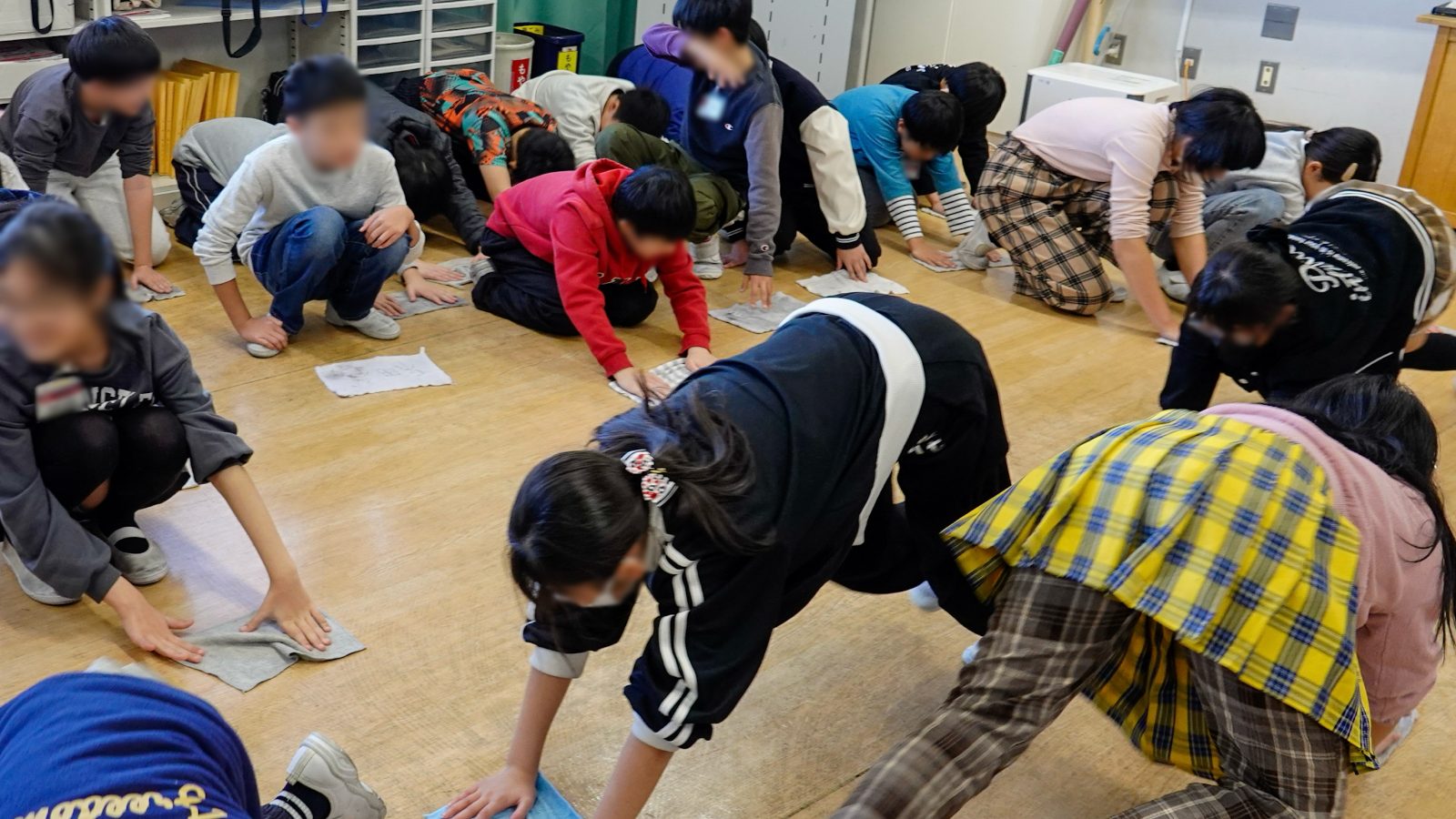
This form lasts because the company is also left with a result: our expertise became a piece of education. It is easier to explain internally than a donation report.
Four things to record for internal reporting
To carry the work into the next year, record the following during the first year.
- Who it reached — not just numbers, but who they were
- What was newly created — material, programme, mechanism
- Whether staff were involved — how many, and at which stage
- What was left on the other side — the organization's growth and its capacity to deliver
An initiative that can answer the fourth gets approved again the following year. Write only what the supporting side achieved and it stays a single-year story.
Ask to see how support is spent, broken down
If you are putting money in, having the spending reported as a single lump makes it hard to explain internally.
TEIGEN JP publishes how support is spent in five categories. In our 2026 crowdfunding, 26 people gave a total of 279,000 yen, 139% of the goal, and it was used along those categories.
More than the size of the sum, check whether the spending is shown by category and whether the shape of the reporting is fixed.
If you are bringing it back inside, change how the session is designed
When a teenager speaks at a staff event or training day, what you get out of it depends on how you ask.
What to avoid is "please speak freely as a representative of young people". The scope is too wide, the speaker cannot prepare, and nothing stays with the audience.
- Be specific about the experience (what did this person do, which episode is it)
- Say in advance what you want the audience to take away
- Do not make it a request for impressions at the end of the adults' discussion
How to write the request is set out in Booking a teenage speaker.
TEIGEN JP speaks From one period (50 minutes), from 20,000 yen (plus travel at actual expense), in person or online.
About Us
TEIGEN JP is a student-led organization founded in June 2023 in Adachi City, Tokyo. Thirty-eight high school and university students (as of June 2026) work across two pillars: civic education and youth participation, and cleanup education and public-mindedness.
We have a record of working as equals with local government, assemblies, schools and companies. Our partnership options are set out in Partnerships with schools and municipalities, and enquiries are handled through Contact Us.